


In today’s market, three gold colors dominate: white gold, yellow gold, and rose gold. Exploring white gold vs yellow gold vs rose gold in depth will help you understand how each type is made, how they differ in appearance, durability, price, and maintenance, and which one might suit your style best. Whether you are shopping for an engagement ring, a bracelet, or an everyday necklace, this comparison will give you the clarity you need to make a confident choice. Choosing the right gold color is one of the most important decisions when buying gold jewelry. While diamonds and gemstones often get the spotlight, the color of gold sets the foundation for how a jewelry piece looks, feels, and ages.
Understanding Gold Colors: Why Gold Isn’t Always Yellow
Pure gold (24K) is naturally yellow. However, pure gold is too soft for most jewelry, so it is mixed with other metals to create stronger alloys. These added metals not only improve durability but also change the color of the gold. That is how we get:

- Yellow gold – mixed mainly with silver and copper
- White gold – mixed with white metals such as nickel, palladium, or zinc
- Rose gold – mixed with a higher percentage of copper
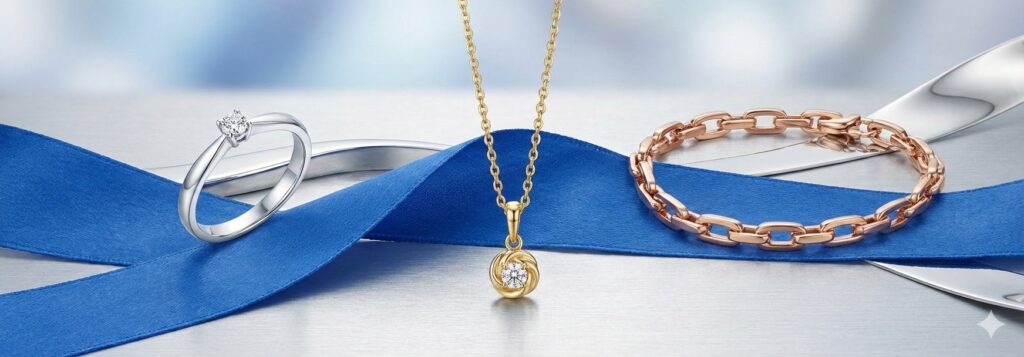
All three types are real gold. So, when we say “white gold vs yellow gold vs rose gold”, it does not mean that any one of them is fake or unreal. The difference lies in the alloy composition and surface treatment, not in purity. The following table lists the above-mentioned key differences of white gold vs yellow gold vs rose gold at a glance:
| Feature | Yellow Gold | White Gold | Rose Gold |
| Color | Warm Yellow | Bright White (plated) | Rosy/Pink |
| Style | Classic, Vintage | Modern, Elegant | Romantic, Trendy |
| Durability | Moderate | Moderate-high | High |
| Maintenance | Low | High (replating needed) | Very low |
| Scratch Resistance | Medium | Medium-high | High |
Yellow Gold: The Classic Choice
Yellow gold is the traditional gold color that has been used in jewelry for thousands of years. Its warm, rich tone is instantly recognizable and often associated with heritage, luxury, and timeless design. This is where the traditional yellow gold is considered an advantage in the white gold vs yellow gold debate. Yellow gold complements warmer skin tones particularly well, but it can flatter almost anyone. It is widely used in classic rings, chains, bangles, and vintage-inspired designs. Yellow gold is typically made by mixing pure gold with silver and copper. The balance between these two metals determines the shade (i.e., lighter or deeper yellow). It is generally:
- Soft and malleable (especially in higher karats)
- Easy to resize and repair
- Less prone to discoloration compared to white gold
However, because it is relatively soft, it can scratch more easily if worn daily, especially in rings. Yellow gold is low-maintenance. It does not require plating and retains its color over time. Occasional cleaning and professional polishing are usually enough to keep it looking new. This is another spot where yellow gold is considered an advantage in the white gold vs yellow gold debate.
White Gold: The Modern Favorite
White gold has become extremely popular in modern jewelry, especially for engagement rings and diamond settings. Its cool, silvery-white appearance enhances the brightness of diamonds and many gemstones. This is where it wins the white gold vs yellow gold debate. White gold works well with:
- Cool skin tones
- Minimalist and contemporary designs
- Platinum-style jewelry at a lower cost
White gold is created by alloying gold with white metals such as nickel or palladium. Naturally, the alloy is slightly gray or yellowish, so most white gold jewelry is coated with rhodium plating to achieve a bright white finish. This plating improves shine, enhances scratch resistance, and creates a clean, platinum-like look. White gold is slightly harder than yellow gold, making it more resistant to scratching. However, the rhodium plating wears off over time, especially on rings. This means that (i) periodic replating is required (usually every 1–2 years) and (ii) without replating, the metal may appear yellowish. So while white gold looks luxurious, it requires more ongoing maintenance than yellow or rose gold.
Rose Gold: The Romantic Trend
Rose gold has surged in popularity over the past decade. Its soft pink tone feels romantic, modern, and distinctive. It works beautifully in vintage designs, minimalist jewelry, and statement pieces. These aspects are where the rose gold dominates the white gold vs yellow gold vs rose gold discussion. Rose gold complements (i) all skin tones, especially neutral and warm tones, (ii) romantic and fashion-forward styles, and (ii) mixed-metal designs. Rose gold contains a higher percentage of copper, which gives it its pink color. The more copper in the alloy, the deeper the rose tone. Because of the copper content, rose gold is:
- More durable than both yellow and white gold
- Highly resistant to scratching and bending
- Ideal for everyday wear
Rose gold is very low-maintenance. It does not require plating and keeps its color permanently. It rarely tarnishes and ages beautifully over time.
White Gold vs Yellow Gold vs Rose Gold Price Comparison
One of the most common questions buyers ask is about the white gold vs yellow gold price. In general, the base price of gold is the same for all colors at the same karat (the price difference is usually modest). However, white gold is more expensive than yellow gold because it often contains more expensive metals, such as palladium, nickel, or zinc, which help to create its distinctive color. Additionally, the process of rhodium plating can add to the cost of white gold. Note that rose gold is sometimes slightly cheaper because copper is less expensive than other alloy metals. In fact, design complexity, brand popularity, gemstones, and craftsmanship affect the final price much more than the gold color.
White Gold vs Yellow Gold vs Rose Gold: Which Is Better for You?
When comparing white gold and yellow gold, lifestyle and personal taste play major roles. Choose yellow gold if you want low maintenance, prefer classic styles, and do not want to worry about replating. On the other hand, choose white gold if you love bright, modern designs, are buying diamond jewelry, and you are comfortable with occasional maintenance. Remember that for maximum durability with minimal care, rose gold is often the most practical option. Although personal taste always comes first, general styling guidelines include:
- Warm skin tones → Yellow gold and rose gold
- Cool skin tones → White gold
- Neutral skin tones → All three colors
Trying different colors in person or through digital previews can help you see what feels right.
📲 Compare White Gold vs Yellow Gold vs Rose on Jeweltic
With so many styles, prices, and sellers available, finding the right piece of gold jewelry can feel overwhelming, especially when it comes to comparing white gold vs yellow gold vs rose gold products. That is where the Jeweltic app becomes an essential tool. It is a smart two-way marketplace designed specifically for the jewelry industry. Jeweltic makes it easy to find exactly what you want in one place. It allows you to:
- Search for the in-app user reviews for white gold vs yellow gold vs rose gold items
- Compare designs from multiple gold jewelers
- Request custom gold pieces through hidden reverse marketing
- Connect directly with trusted sellers
Find, compare, and buy any white gold, yellow gold, or rose gold jewelry directly through the Jeweltic app.
👉 Download from Google Play Store
👉 Download from Apple App Store (coming soon…)

Last Words
When it comes to white gold vs yellow gold vs rose gold, there is no single “best” choice; it is only about the right choice for you. Each color offers its own beauty, strengths, and character. Yellow gold brings timeless tradition. White gold delivers modern elegance. Rose gold offers romantic durability. By understanding the differences in appearance, price, durability, and maintenance, you can choose a gold color that fits your style, lifestyle, and long-term expectations. And with platforms like Jeweltic, finding your ideal gold jewelry has never been easier. Ultimately, the choice between all gold colors (white gold vs yellow gold vs rose gold) will depend on your personal style and preferences, as well as your budget and skin tone.
Frequently Asked Questions (FAQs)
Which is better: white gold, yellow gold, or rose gold?
There is no single “best” option. White gold is modern and elegant, yellow gold is classic and low-maintenance, and rose gold is durable and trendy. The best choice depends on your style, skin tone, and how often you plan to wear the jewelry.
Is white gold more expensive than yellow gold?
In most cases, white gold is slightly more expensive than yellow gold. Here is where yellow gold wins the white gold vs yellow gold debate. This is because white gold often contains palladium and requires rhodium plating, which adds to the production and maintenance costs.
Does white gold turn yellow over time?
Yes. White gold is usually coated with rhodium, and as this plating wears off, the natural yellowish color of the gold alloy may become visible. Replating restores the bright white finish.
Which gold color is the most durable for everyday wear?
Rose gold is generally the most durable option because its higher copper content makes it harder and more resistant to scratches. This is one area where rose gold may be considered an advantage in the white gold vs yellow gold vs rose gold debate.
Can I mix white gold, yellow gold, and rose gold together?
Yes. Mixing gold colors is a popular modern trend. Many designs intentionally combine white, yellow, and rose gold to create contrast and visual interest, and they can be worn together without any issues.