

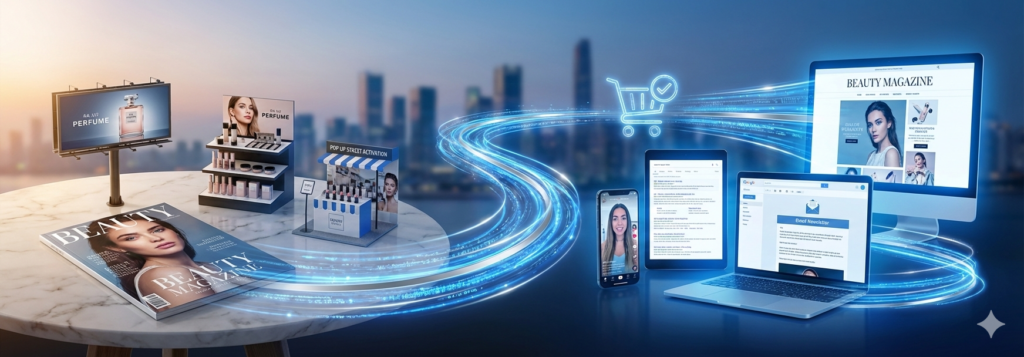
Modern beauty marketing is a blend of offline influence and digital acceleration. Brands grow through paper-based magazines, billboards, retail displays, and guerrilla activations that create physical visibility and credibility. Simultaneously, online channels like social media, PPC ads, online magazines, affiliate marketing, influencer content, SEO, and email campaigns shape how customers discover and trust products. Whether you sell skincare, makeup, perfume, or personal care, buyers evaluate reviews, ingredients, and brand values before purchasing. The smartest cosmetic marketing combines storytelling, education, and proof. Even traditional beauty marketing remains powerful when paired with modern targeting. The best strategies create memorable experiences both online and offline. This blog explores the 4 most popular non-digital and 4 most popular digital ways.
Billboards and Outdoor Advertising
Billboards remain a high-impact form of traditional marketing because they create instant brand recognition in busy locations. For premium beauty marketing, outdoor placements near malls, beauty districts, airports, and high-traffic highways build authority and perceived scale. Cosmetic brands can promote hero products, like a signature lipstick shade, sunscreen, or fragrance, using bold visuals and minimal messaging. QR codes can bridge offline attention into online conversion. Outdoor campaigns work best when combined with strong retail availability so buyers can act quickly. While it is less targeted than digital, billboards are memorable and credible. For large-scale cosmetic marketing, outdoor advertising can shape mass perception and support national product launches. This approach also strengthens marketing during seasonal promotions.
Paper-Based Magazines and Print PR
Print magazines still influence buying decisions, making them valuable in traditional beauty marketing. Beauty brands can gain trust through product features, editorials, and expert recommendations in publications focused on skincare, wellness, and fashion. This type of marketing is especially powerful for premium cosmetics and perfumes because print creates a luxury association. Appearing in trusted magazines builds credibility faster than paid ads alone. Brands can run advertorials, sponsor beauty award pages, or send PR packages to editors for review. For makeup marketing, seasonal magazine spreads can drive demand for new collections and trend-driven looks. When executed well, print PR makes a brand feel established and desirable.
In-Store Promotions and Sampling
Sampling is one of the most effective traditional marketing techniques because beauty is experiential. Customers want to test fragrance notes, foundation shades, and skincare texture before buying. In-store demos, mini testers, and “try-before-you-buy” stations reduce hesitation and improve conversion. Retail promotions such as bundle offers, gift-with-purchase, and limited-edition packaging create urgency. Beauty advisors can educate customers about ingredients, usage methods, and results, building trust instantly. Sampling is also excellent for product launches because it generates immediate feedback. In makeup marketing, shade matching and live tutorials can turn a curious visitor into a loyal customer. Even small brands can collaborate with salons, pharmacies, and boutiques to offer low-cost sampling campaigns.
Guerrilla Marketing and Street Activations
Guerrilla marketing creates surprise and emotional impact, making it a creative form of marketing. Beauty brands can design pop-up booths, street photo stations, or interactive product experiences in high-footfall areas. A bold public activation can generate word-of-mouth and social sharing without huge media spending. For example, a skincare brand could offer free skin analysis in a public kiosk, while a perfume brand could create a “scent tunnel” where people explore fragrance profiles. Street campaigns work best when they offer samples, discounts, or mini makeovers. For makeup marketing, collaborations with fashion events or music festivals can create a strong lifestyle association. Guerrilla tactics build excitement quickly and help new brands stand out in crowded markets.
Social Media Marketing
Social media marketing via platforms like Instagram and TikTok allows brands to showcase results through tutorials, before-and-after videos, and ingredient education. In cosmetic marketing, user-generated content and reviews act as social proof, reducing buyer doubt. Brands can use short videos to demonstrate product texture, coverage, and wear tests in real life. Stories and live streams enable Q&As and limited-time offers, while creator collaborations expand reach. Even traditional beauty marketing benefits from social amplification when offline campaigns go viral online. Trend-based content drives fast attention and encourages buyers to replicate looks using specific products. Consistency and authenticity are key to sustainable growth.
Jeweltic as a Modern Social Media Strategy
Jeweltic is a next-generation approach to cosmetic marketing, as the first social media platform exclusively designed for beauty, personal care, and jewelry industries. Unlike general social platforms, Jeweltic tailors every feature to meet the needs of beauty businesses, stores, brands, and lovers. This makes it a high-intent environment for beauty marketing because users are already browsing within the beauty and personal care mindset. Jeweltic enables businesses to monitor trends, engage with consumers directly, and test new product ideas by analyzing user posts, comments, and demands about cosmetics, skincare, perfume, and personal care routines. Here’s how Jeweltic stands out:
- Hidden Reverse Marketing: Instead of beauty brands pushing products outward through promoted ads and influencer content, users post what they want, need, or admire, like a vegan lipstick shade, a discontinued perfume, or skincare for sensitive skin. Businesses track real-time demand and respond with custom solutions.
- B2B and B2C functionality: Jeweltic serves both individual buyers and cosmetic businesses, offering marketplace-like discovery and direct engagement.
- Focused audience: Compared with current social platforms, it removes irrelevant noise and keeps the audience focused. Everyone on the platform is passionate about beauty, perfume, personal care, makeup, jewelry, and watches.

Beauty Marketing Through PPC Ads
PPC advertising is a scalable method for brands that want measurable growth. Google Ads captures high-intent searches like “best vitamin C serum” or “long-lasting lipstick”, while Shopping Ads show products directly in results. Facebook and Instagram Ads support retargeting and interest-based targeting, which is critical for cosmetic marketing. TikTok Ads can drive fast awareness for trendy items, especially in makeup marketing. Successful PPC requires strong landing pages, clear benefits, and trust signals such as dermatology testing, vegan claims, and return policies. Even traditional beauty marketing agencies now rely on PPC to compete digitally. For maximum ROI, campaigns should test creatives continuously and optimize based on conversion data. PPC works best when paired with organic content and customer reviews.
Affiliate Marketing for Beauty Brands
Affiliate marketing is performance-based beauty marketing where creators, bloggers, and review platforms earn commissions for sales they generate. This is powerful because buyers trust third-party recommendations more than direct brand claims. Beauty affiliates can create skincare routine guides, fragrance comparisons, and makeup tutorials using trackable links or discount codes. Affiliates often drive strong conversions during seasonal launches, holiday bundles, and limited editions. Brands benefit because they only pay when results occur. Even businesses focused on traditional beauty marketing can scale online using affiliates without massive budgets. The key is choosing partners aligned with your brand values and providing them with strong assets: product photos, ingredient information, and clear claims. When executed well, affiliate marketing builds repeat sales.
SEO and Content Marketing
SEO is a long-term beauty marketing strategy that builds sustainable traffic and authority. Buyers search for solutions like “how to reduce acne,” “best perfume for summer,” or “foundation for oily skin,” and brands that answer these queries earn trust early. Educational blogs, ingredient breakdowns, and dermatologist-style guidance improve conversion because they reduce uncertainty. For makeup marketing, content can focus on shade selection, application tips, and trend-inspired looks. SEO also strengthens product pages through optimized titles, FAQs, and structured data. Unlike PPC, SEO keeps generating leads without constant spending. Even traditional beauty marketing brands need SEO because modern buyers research online before purchasing. The best SEO strategy combines high-quality content, internal linking, and fast mobile performance.
Conclusion
Scaling a cosmetic brand requires combining offline credibility with digital precision. The best beauty marketing approach uses traditional marketing methods for visibility and trust (billboards, print PR, sampling, and guerrilla activations) while using digital channels for growth and conversion. Social media, PPC, affiliate programs, and SEO each play a role in modern cosmetic marketing. Successful brands also master product education, customer proof, and emotional storytelling. In competitive makeup marketing, the winners are brands that listen closely and adapt quickly. Jeweltic adds a modern advantage by turning user intent into real-time demand through Hidden Reverse Marketing, allowing brands to respond rather than interrupt. When your strategy is buyer-focused, consistent, and multi-channel, growth becomes predictable and sustainable.
👉 Download Jeweltic from Google Play Store
👉 Download Jeweltic from Apple App Store (coming soon…)

Frequently Asked Questions (FAQs)
What is beauty marketing?
Beauty marketing is how cosmetic brands promote products using branding, storytelling, ads, social media, and customer trust-building strategies.
What are the most effective beauty marketing strategies today?
The best strategies include social media content, PPC ads, SEO blogs, affiliate marketing, sampling, and in-store promotions.
How can small cosmetic brands compete with big brands?
Small brands can win by focusing on niche audiences, strong product positioning, community building, and user-generated content instead of expensive campaigns.
What is the best social media platform for cosmetic marketing?
TikTok and Instagram perform best for discovery, while YouTube is ideal for long tutorials and reviews that increase trust and conversions.
How does Jeweltic help with beauty marketing?
Jeweltic helps brands track real demand through Hidden Reverse Marketing, engage buyers directly, and sell in a focused beauty-only platform.